joshua tree, we’ve got a pampas grass problem
Those big, feathery plumes of pampas grass might look like the perfect boho wedding accent, but here’s the actual truth: pampas grass is an invasive species that does serious damage to California’s ecosystems especially in fragile desert landscapes like Joshua Tree.
How pampas grass got here
Native to South America, pampas grass (Cortaderia selloana and Cortaderia jubata) was introduced to California in the 1800s for erosion control and as an ornamental plant. But once it escaped gardens, it spread aggressively across the state.
The California Invasive Plant Council now gives pampas grass a “high” invasive rating, meaning it has severe ecological impacts and is very difficult to control. Each plume can release up to 100,000 seeds – millions from a single plant every year – carried for miles by the wind. These seeds thrive on bare ground, quickly outcompeting native species.
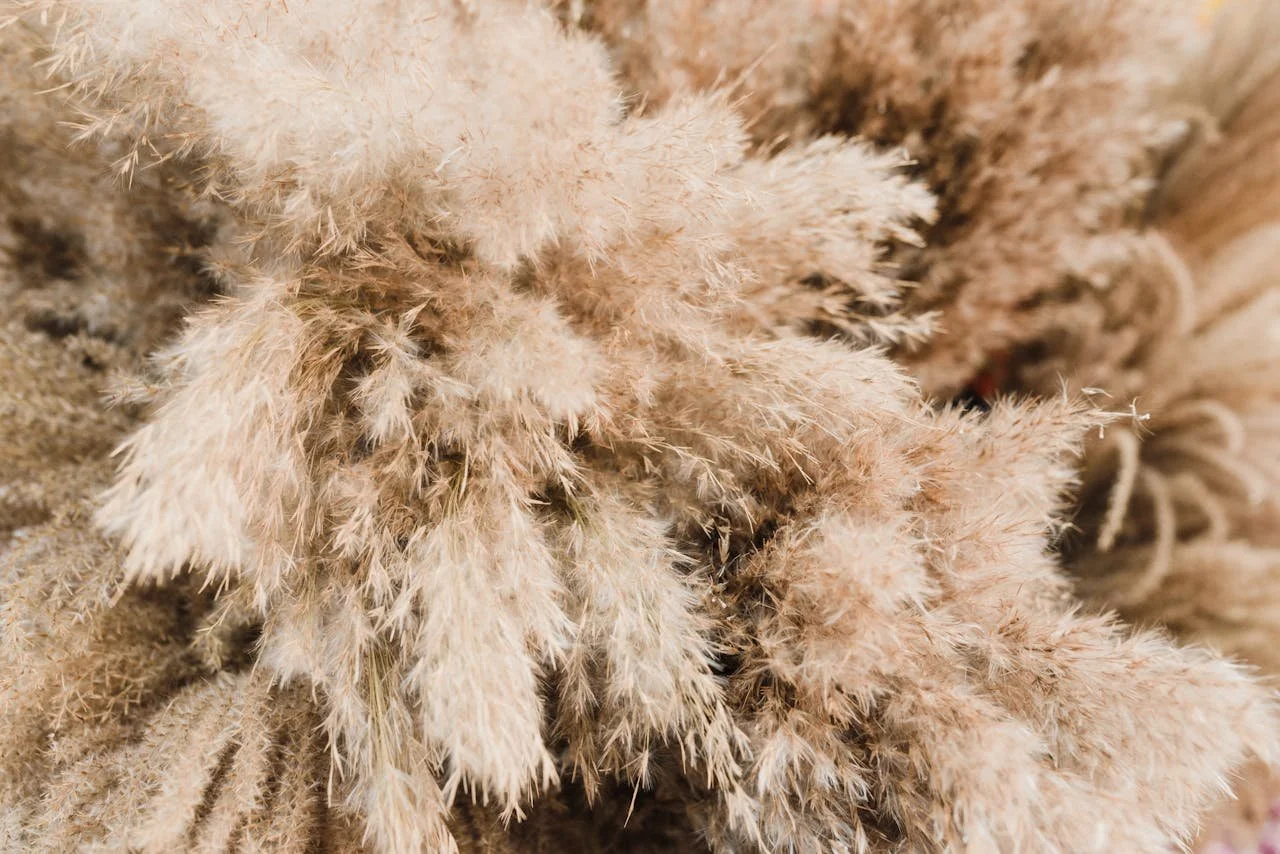
Photo by Arina Krasnikova
Why it’s a fire hazard
Pampas grass doesn’t just push out native plants. It also fuels dangerous wildfires.
According to the University of California Division of Agriculture and Natural Resources (Publication 8397, 2009):
Deserts in Southern California have the least history of wildfires because the vegetation is sparse and discontinuous. Native species here are not adapted to fire.
Pampas grass grows in huge clumps that are 6-8 feet tall which become massive torches when ignited, thanks to their old leaf litter and dry plumes.
Invasive plants like pampas grass create continuous fuels that make fires easier to ignite and spread faster than they would naturally.
After a fire, invasives reestablish quickly, while native plants struggle to recover leading to a permanent shift from biodiverse habitats to low-diversity, invasive-dominated landscapes.
In riparian areas (where sycamores, cottonwoods, and willows grow), fires used to be rare and low-intensity. With invasive plants, fires now occur more often, burn hotter, and can reach into the canopy, killing native trees while invasives bounce back stronger than ever.
The impact on the desert
This cycle is devastating for deserts like Joshua Tree, which evolved with little to no fire. Historically, a lightning strike might burn a single Joshua tree and then fizzle out. Today, thanks to invasive grasses, flames spread rapidly across the desert floor. Instead of once-a-century burns, the Mojave Desert now experiences massive fires every 5–30 years. Joshua trees and other desert plants can’t adapt to this pace. They die off, and invasive grasses take over.
Why it’s banned in the Park
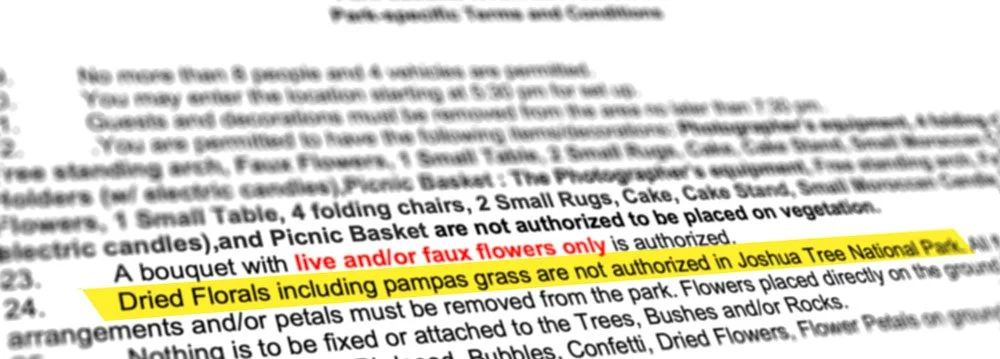
Because pampas grass poses such a risk, it’s not allowed in Joshua Tree National Park weddings or décor no matter fresh or dried. Even a decorative plume can drop seeds that take root where they don’t belong.
What we’re doing instead
At Posy Laboratory, we believe design should never come at the expense of the environment. That’s why we’ve stepped away from pampas grass, are saying no to requests to use it, and focus instead on sustainable alternatives. Sometimes that means harvesting responsibly from our native desert plant garden, other times it means sourcing fresh, creative options from our trusted vendors that give the same texture and movement without threatening the desert.
This way, we can still create florals that feel wild and textural while staying true to our mission of protecting the landscapes that inspire us.

We created this boho-inspired wedding bouquet using a mix of fresh florals and native plants from our garden. Non-flowering native desert broom and non-native astilbe were used to create the fluffy look of pampas grass while creating no harm while this couple said their “I do’s” in Joshua Tree National Park.