our sustainable installation: a full breakdown of every material we used
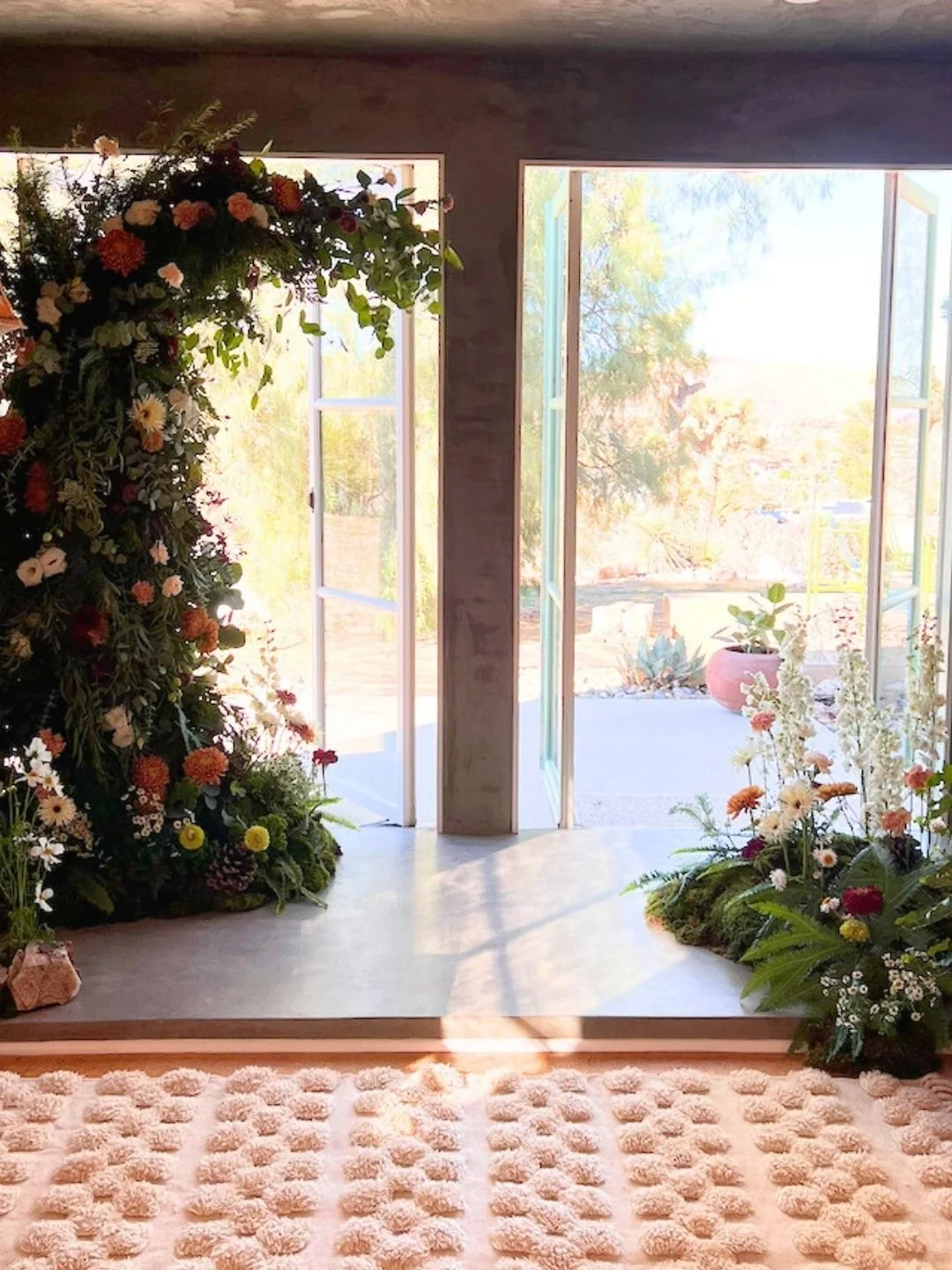
In a previous post and on Instagram, we shared how we kept the flowers in our installation fresh without using plastic. That post focused on hydration methods like plant-fiber cups. In this article, we’re sharing the rest of the materials behind the installation. How we built the structure and every attachment, support, and protective layer.
Why we share our sustainability practices
Sustainability is at the core of everything we do at Posy Laboratory. We didn’t start this business to be “just another florist.” We started it to challenge the harmful norms that have long been considered “just the way it’s done.” And sharing what we’ve learned is how we move the entire industry forward.
One business can only do so much alone. But if we openly share tools, methods, and alternatives, we can help florists, designers, couples, and event teams make more eco-conscious choices that collectively make a bigger impact.
Now let’s dive in.
Locally grown florals + reusable natural materials
California-grown greenery
We sourced ferns, white fir, and pinecones from growers along California’s Central Coast and Northern California. Eucalyptus and Agonis came directly from a Southern California farm. All additional blooms came from small local farms in the Inland Empire or, when needed, from a larger wholesaler where we prioritized California-grown varieties.
When we choose local, we’re not trying to exclude anyone. We are mindful about reducing travel distance, keeping flowers fresher, and minimizing fuel and energy use. It’s one of the simplest and most effective sustainability choices florists can make.
Moss pieces + moss mats
All moss used in the installation was kept alive in our studio fridge and will be reused in future projects. Moss is one of the most versatile, reusable materials we work with. Certain types of mosses are also important to their natural ecosystems, so the less we take and waste, the better.
Reusable, durable, long-lasting structural materials
MDF Wood Bases
Jigsaw-cut bases were used to stabilize the half-arch and create the “forest floor” portion of the installation. MDF (medium density fiberboard) is durable, holds screws well, and can be reused for future installations, either with this arch or another large piece.
Sustainability check-In
MDF is made from recycled wood fibers like sawdust and shavings, which gives new life to materials that would otherwise be discarded. Its durability and affordability make it a practical option for repeated use, but it isn’t without drawbacks: traditional MDF can contain formaldehyde-based adhesives, requires significant energy to produce, and cannot be recycled once manufactured. While low-emission or formaldehyde-free versions exist, MDF remains a choice that balances reuse and practicality. Not a perfect material, but a thoughtful one when handled responsibly.
Rented metal half-arch
Instead of purchasing a flimsy arch that might only last a few uses, we rented a high-quality metal arch from a flower friend. Renting keeps materials in circulation and avoids unnecessary purchases. The arch’s removable segments make it adaptable to different heights and installations.
Base weights
The weights used to stabilize the installation were hand-me-down dumbbells. No new materials required.
Plastic-free hydration tools
Plant fiber cups
Home-compostable fiber cups hydrated the flowers in the base of the design. Because they’re home compostable, they safely break down in backyard systems, unlike many “compostable” products that require industrial facilities. They’re also reusable for multiple installs.
OLMS WaterPods
Made from fibrous sugarcane pulp, these pods held individual stems or small groups of flowers. They break down in ordinary soil within 18–24 months and leave behind zero microplastics.
OshunPouch
These pouches replaced traditional floral foam and provided structure and hydration for the base flowers. They’re 100% biodegradable and home compostable — a huge improvement over floral foam, which is a petroleum-based microplastic.
Attachment + support materials
Reusable chicken wire
The backbone of the entire installation. We used chicken wire to shape the arch, hold stems, and create the foundation for our reusable moss mats. After the event, it was easily removed and stored for future use. We use/reuse chicken wire all the time.
Plant-based zip ties
Zip ties made from renewable materials held chicken wire sections together. They reduce CO₂ by more than 85% compared to nylon, use 80% less water in production, and can be recycled with paper products.
Hemp twine
We used to secure weights to the bases. Fully compostable and gentle on the environment.
Surface + covering materials
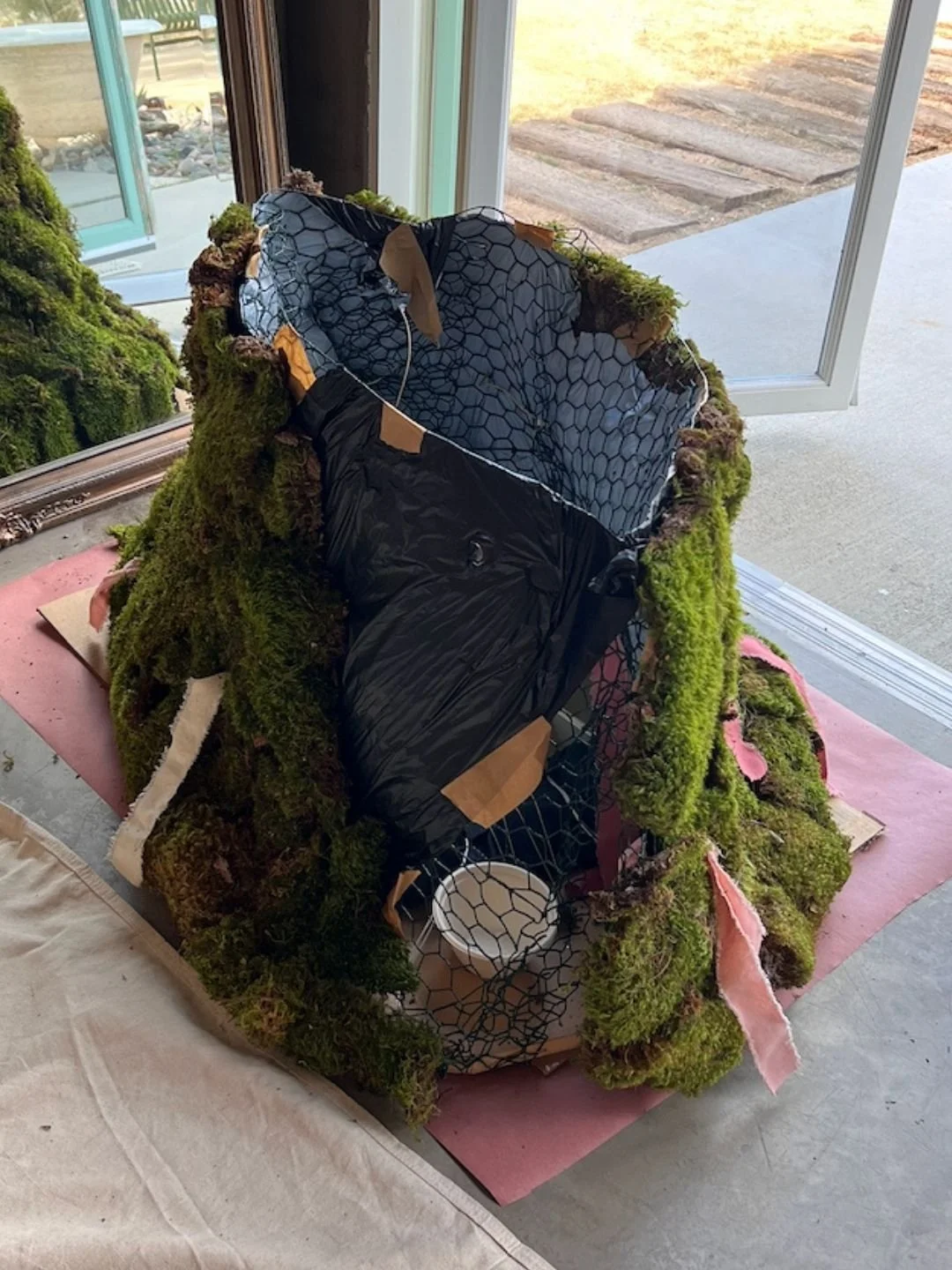
Surface protection paper
A layer of recycled surface-protection paper covered the floor to protect it from water and scratches.
Biodegradable mulch film
This film (shown above under the moss layer) may look like plastic, but it isn’t. It’s made from vegetable starch based raw materials and soil-biodegradable resins. It breaks down without leaving chemical residues, and provided the surface area we needed for moss without relying on actual plastic sheeting.
Kraft paper tape
Used to secure the mulch film. Made from 100% FSC-certified paper and fully recyclable.
Sustainability isn’t a trend for us. It’s the standard we choose.
Every installation is an opportunity to challenge the norms of the floral industry, reduce waste, and prove that large pieces can be built beautifully without microplastics, single-use foam, or unnecessary materials.