the untamed beauty of desert natives in floral design
There’s something captivating about the rugged, untamed beauty of desert plants. It’s not just the way they look – though their shapes and textures have a uniqueness all their own – but what they represent. These plants thrive in some of the toughest environments on Earth, and they bring that tenacity into every arrangement.
Rather than relying on more traditional blooms like roses or lilies, imagine a bouquet where the twisted, spiny branches of ocotillo rise above soft greenery, or where the silvery leaves of sage add depth to bright orange desert globemallow. These plants don’t just add visual interest, they tell the story of the desert’s resilient spirit.

But beyond aesthetics, desert natives offer something even more important: sustainability. While imported flowers can come with a significant carbon footprint, desert natives are perfectly adapted to thrive in their environment requiring minimal water and resources to thrive. Some need up to 80% less water than other blooms, making them a sustainable choice in a world where every drop counts. These plants minimize water loss, maximize water uptake, and protect themselves from extreme heat.

We created beautiful table arrangements for Native American Land Conservancy's new learning center's grand opening celebration. Many of the designs' plants came from our own garden, including desert willow flowers, four wing saltbush, creosote, Cleveland sage, jojoba, chuparosa, and palo verde flowers. The rest were grown in California or a West Coast state. Photo by the Native American Land Conservancy team and used with permission
Water Conservation Strategies
Many desert plants have adaptations to reduce water loss through transpiration. This includes:
Few or no leaves.
Spines, thorns, or hairs instead of leaves.
Green skin is used for photosynthesis instead of leaves.
Waxy leaves, or leaves coated in oils, slow down transpiration.
These adaptations help the plant reduce exposure to hot sunlight and promote airflow to stay cool.

A pretty floral cuff designed with flowers and plants from our garden. A prickly pear flower, white sage leaves, and Cleveland Sage flower seed pods adorn a gold cuff bracelet. There are a few succulents hiding in there too!
Water Storage and Root Systems
Some species have spongy, shallow root systems to absorb even minimal rainwater. Certain plants store large amounts of water in their tissues to use during dry periods. Plants may have ribs that direct moisture toward their roots.

This installation piece includes fourwing saltbush (Atriplex canescens),
smoketree branches, desert marigold flowers, desert willow flowers, pomegranate branches, Texas sage flowers, rabbitbrush flowers, desert broom flowers, Parish's Goldeneye seed heads, creosote leaves, trimmed palm tree fronds, and attached to a Quailbush trunk.
Tap Roots
There are plants with extremely deep roots, known as tap roots, that allow them to access water deep underground. For example, mesquites have a long tap root, reaching up to 25 meters deep. (SpringerLink)(GeoKansas)
A highly successful desert species due to its deep tap root, shallow root system, and wax-coated leaves that minimize water loss is the ever-present creosote. Additionally, its bitter smell and taste deter animals and other plants from competing with it for water. (GeoKansas)
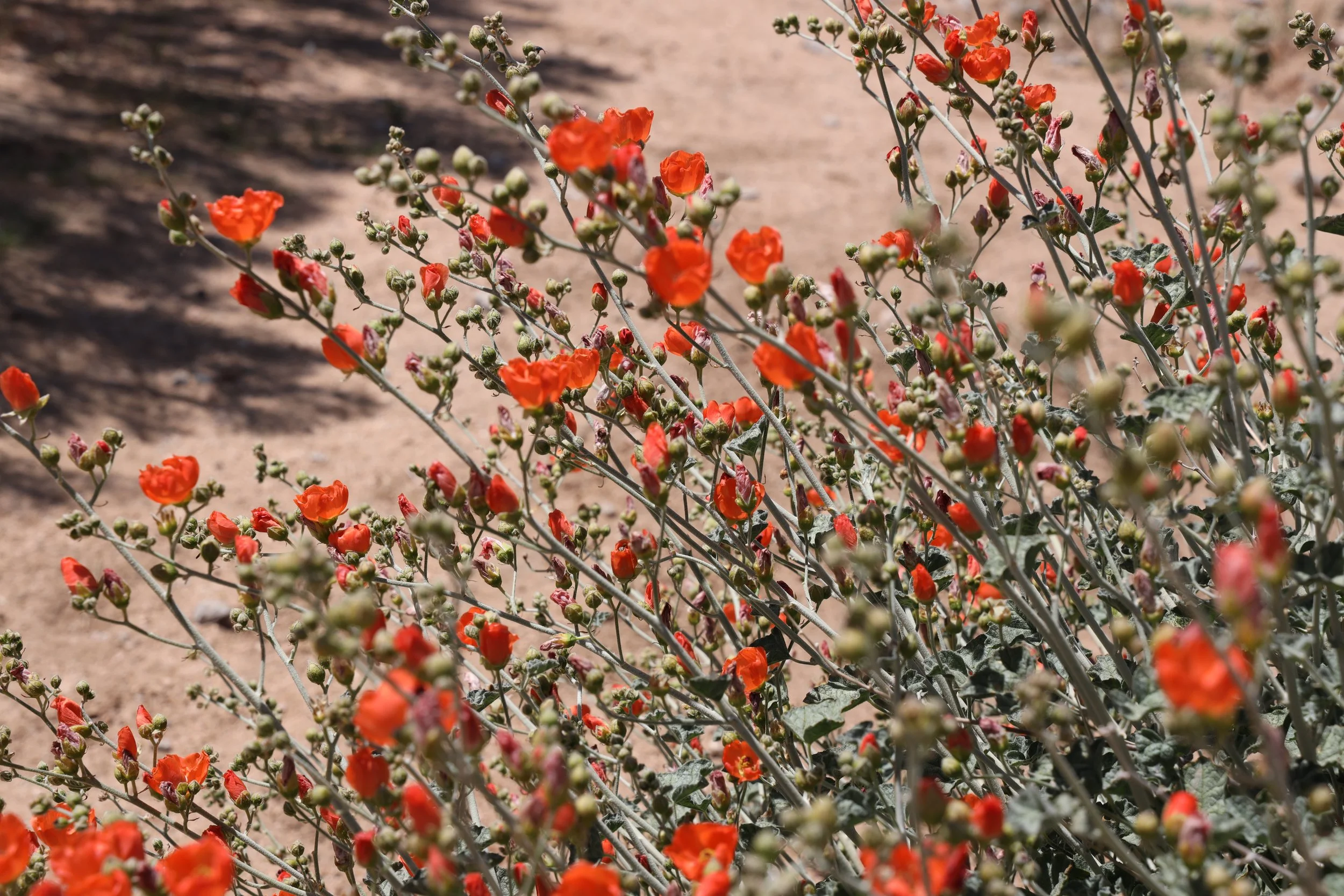
Desert Globemallow (Sphaeralcea ambigua)
Dormancy and Rapid Growth
Perennial desert plants stay dormant during dry periods and grow rapidly when water becomes available. For example, the ocotillo grows leaves quickly after rain, blooms, produces seeds, then drops its leaves and returns to dormancy.
Other examples of perennials include brittlebush, California poppy, and the desert paintbrush (which also taps into host plants for water).

Brittlebush (Encelia farinosa)
Annual plants germinate only after a significant rain, grow and reproduce quickly, then die, leaving behind seeds that lie dormant until the next rains. Examples include wildflowers that create colorful desert displays in the spring, including the sand verbena, Mojave aster, and dune evening primrose.

From our garden of abundance: This arrangement is composed of creosote, white sage, rabbitbrush, cloud sage, coyote melon, desert marigold, and fig leaves.
Seed Resilience
Desert soils hold thousands of perennial and annual seeds per handful, allowing the ecosystem to regenerate after periods of drought, with some areas holding up to 200,000 seeds per square meter.
Local ecosystems
By supporting native flora, you’re also helping local ecosystems, providing habitat and food for pollinators like bees, butterflies, and hummingbirds.

Floral arrangement composed of desert native and drought tolerant plants like chuparosa, fourwing saltbush, brittlebush, rosemary, rabbitbrush, buckwheat, and deer grass.
Floral design with desert natives is about more than beauty – it’s about embracing a new way of thinking about the world around us. They tell a story of survival and harmony with nature. Every arrangement becomes a chance to celebrate resilience and sustainability, to honor the power and grace of nature in its most untamed form, and a small tribute to the arid landscapes, perfect for those who value both beauty and eco-consciousness.
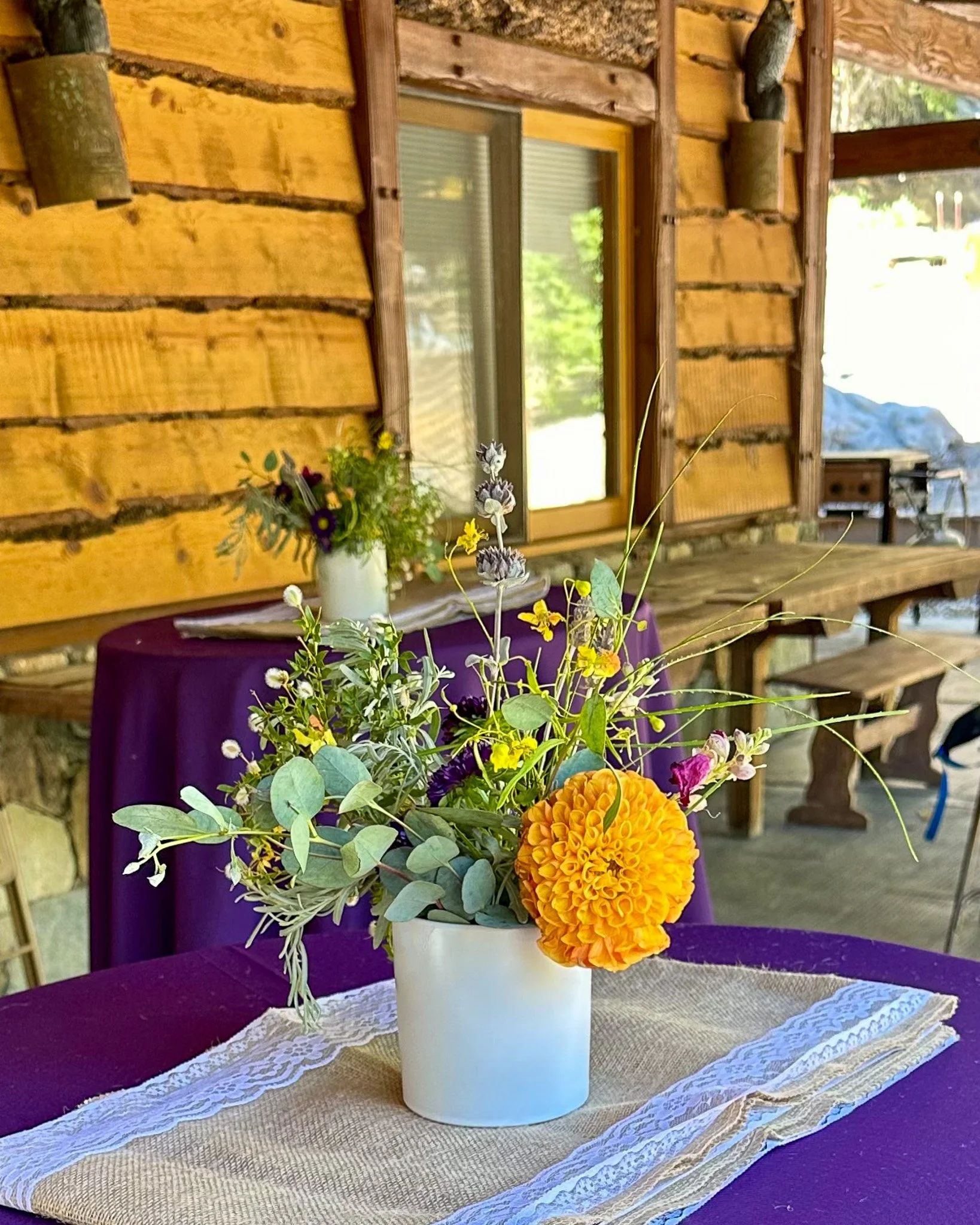
Another table arrangement created for Native American Land Conservancy. This design included plants from our own garden, such as desert willow flowers, four wing saltbush, creosote, Cleveland sage, jojoba, chuparosa, and palo verde flowers. The rest were grown in California or a West Coast state. Photo by the Native American Land Conservancy team and used with permission
Statistics and detailed information obtained from multiple sources including DesertUSA.